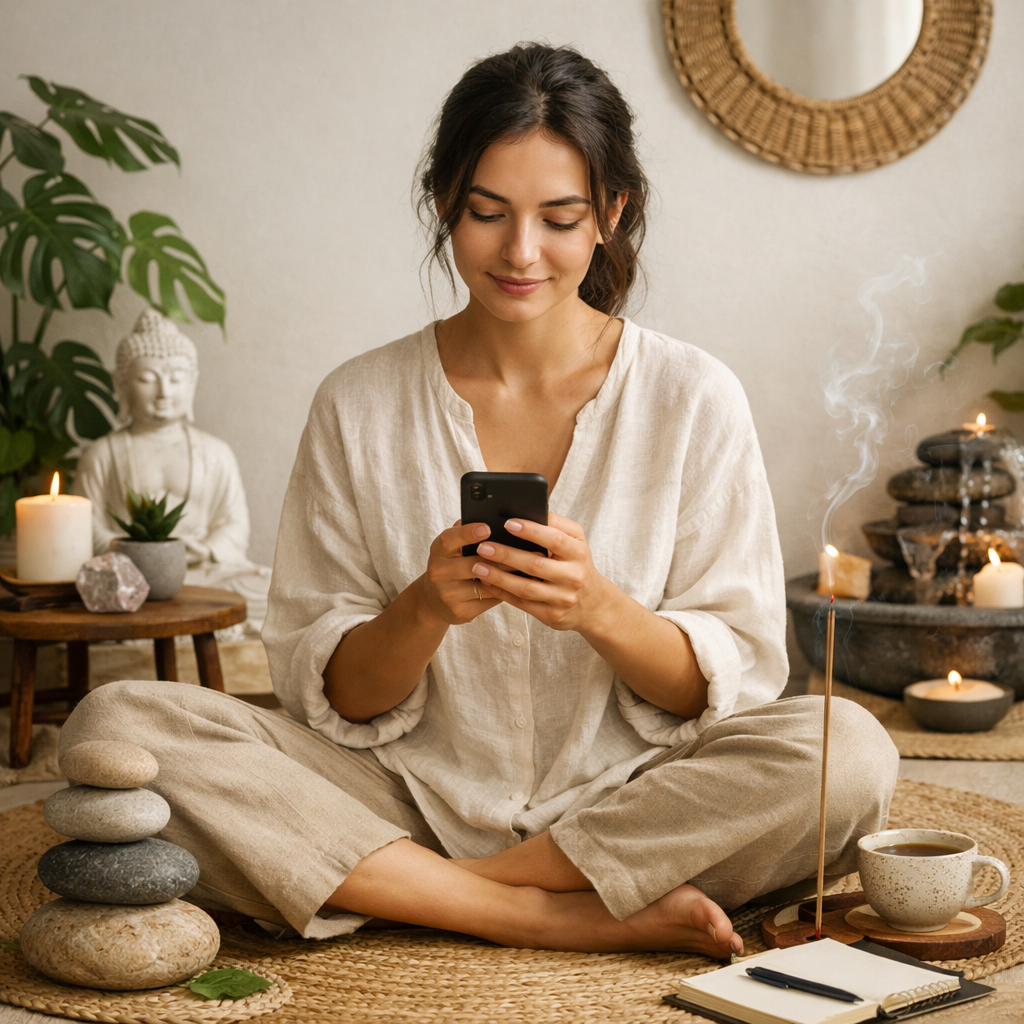


The difference between scrolling through life and actually living it
Let’s be honest. Most of us don’t really “use” social media. Social media uses us.
We open Instagram to check one thing and resurface 40 minutes later, vaguely unsatisfied, unsure of what we just consumed. We post something and then spend the next hour refreshing for likes. We compare our ordinary Tuesday to someone else’s highlight reel — and somehow come away feeling like we’re falling behind.
But it doesn’t have to work this way. Social media, used intentionally, can be a genuinely powerful tool for connection, learning, and creativity. The platform itself is neutral. What matters is the relationship you choose to have with it.
“Social media is not the problem. Unconscious social media is.”
The Two Modes of Social Media Use
There’s a useful distinction worth making: passive consumption versus active engagement.
Passive consumption is the default. You open the app, you scroll, you absorb. Content washes over you. You react, but you don’t really participate. This mode is associated with higher rates of anxiety, loneliness, and what researchers call “social comparison” — the habit of measuring your own life against the curated presentations of others.
Active engagement looks different. You comment thoughtfully. You share something you genuinely believe in. You reach out to someone you’ve been meaning to reconnect with. You learn something and pass it on. Studies consistently show that this mode of use is associated with greater well-being, stronger relationships, and a more positive sense of self.
The difference isn’t the platform. It’s the posture.
Five Intentional Ways to Use Social Media
📌 Follow for growth, not just entertainment Curate your feed deliberately. Follow accounts that teach you something, challenge your thinking, or expose you to perspectives outside your own. Your feed is an environment — design it like one.
⏱ Set a time container Rather than leaving apps open in the background all day, batch your social media use. Fifteen minutes in the morning, fifteen in the evening. The constraint forces intentionality — you choose what to look at rather than falling in passively.
💬 Engage, don’t just consume Leave a real comment. Share someone’s work with a genuine recommendation. Send a voice note instead of a like. Relationships built on social media deepen only when both people show up as actual humans.
📵 Protect certain hours The first 30 minutes after waking and the hour before sleep are your most neurologically vulnerable windows. Scrolling during these times floods your brain with stimulation before it has oriented itself. Guard these hours fiercely.
🎯 Know your “why” before you open the app Before you tap that icon, ask: why am I opening this right now? Boredom? Procrastination? Or an actual purpose — checking a message, sharing something, finding inspiration? The question alone interrupts the autopilot.
The Comparison Trap
Nothing drains social media of its joy faster than comparison. And the algorithm knows it — content that provokes envy, aspiration, and insecurity tends to generate more engagement, so it gets pushed further.
The antidote isn’t to stop caring about other people’s lives. It’s to remember, viscerally, that what you are seeing is a performance. Not a lie, necessarily — but a selection. Nobody posts the 11 AM Tuesday when nothing is happening and the coffee has gone cold. You are comparing your full experience — with all its mess and uncertainty — to someone else’s carefully chosen moments.
Recognizing this doesn’t make the comparison disappear. But it does loosen its grip.
You are not behind. You are just seeing someone else’s highlight reel while living your own unedited footage.
When to Take a Break
Sometimes the most powerful thing you can do with social media is put it down entirely — for a day, a week, a month. Signs that a break might be overdue:
- You feel anxious when you can’t check your phone
- You find yourself performing for an imaginary audience even when offline
- Your mood is consistently worse after scrolling than before
- You’re spending more time documenting experiences than having them
A digital detox doesn’t need to be dramatic. Even a single phone-free Sunday can recalibrate your relationship with these platforms and remind you what your attention actually feels like when it belongs to you.
Using It as a Tool, Not a Mirror
The healthiest relationship with social media treats it as a tool — something you pick up for a specific purpose and put down when the task is done. A hammer isn’t something you carry around all day hoping it will make you feel better about yourself.
Use it to stay in touch with people you genuinely care about. Use it to discover ideas, music, books, and art you would never have found otherwise. Use it to share your work, your voice, your perspective with people who might benefit from it.
But don’t use it to fill silence. Don’t use it to measure your worth. And don’t let it convince you that a life worth living needs to be witnessed to count.
The question isn’t really “how do you use social media?” The deeper question is: does your social media use reflect the kind of person you want to be?
If the answer is yes — you’re doing it right. If it’s no, the good news is that the app is always just one decision away from being used differently.
Put the phone down. Look up. The world, as it turns out, is still happening.
Wellness & Lifestyle · April 12, 2026 · 6 min read



Leave a Reply